An In-depth Analysis of the Hydroxycarbamide Market, 2024–2033
Allied Market Research released a report on the hydroxycarbamide industry, which provides industry dynamics, including growth drivers, opportunities, and challenges. This report further offers regional analysis and a competitive landscape of the domain. The sector accounted for $145.2 million in 2023 and is anticipated to reach $230.1 million by 2033, growing at a CAGR of 4.7% during the study period.
► Don’t Miss Out “Download Your Exclusive Sample PDF Report” Now:
https://www.alliedmarketresearch.com/request-sample/A324442
Hydroxycarbamide, also called hydroxyurea, is a medication primarily used to treat certain types of cancer and blood disorders such as sickle cell anemia, essential thrombocythemia, and polycythemia vera. It works by inhibiting ribonucleoside diphosphate reductase, the enzyme crucial for DNA synthesis. This helps in effectively reducing blood cell production in the bone marrow. It helps in reducing the pain crises and slows down the growth of cancer cells. This proves beneficial in conditions that are characterized by excessive production of blood cells.
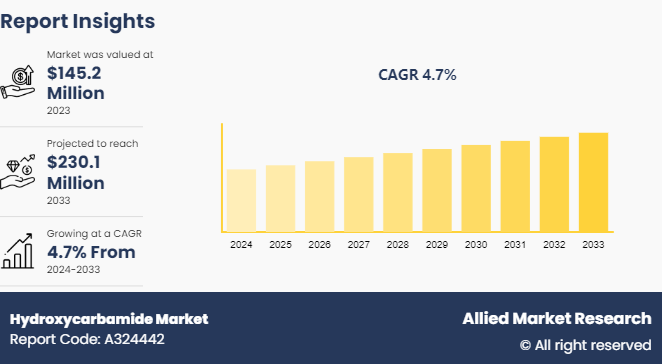
The report offers a thorough analysis of the hydroxycarbamide market with a detailed study of various key players, and their competitive landscape along with market dynamics, vital segments, regions, and their major countries. It provides a clear picture of the current market situation, and the future trends of the hydroxycarbamide market on the basis of the impact of various market dynamics and vital forces influencing the market. The drivers and opportunities contributing to the hydroxycarbamide market growth are studied in the market dynamics.
Rise in the number of patients diagnosed with sickle cell anemia is the major driving factor of the hydroxycarbamide market. The prevalence of numerous hematologic conditions is on the rise globally, which fuels the requirement of hydroxycarbamide in treating these malignancies. Enhanced diagnostic tools and a rise in government efforts and international initiatives to increase awareness about genetic and blood disorders are projected to boost the growth of the hydroxycarbamide market.
Advancements in pharmaceutical formulations and patient compliance initiatives have enhanced the diagnosis of conditions such as polycythemia vera and sickle cell anemia. Thus, numerous governments and healthcare organizations have recognized the importance of hydroxycarbamide and are promoting its availability and distribution.
Important questions
- What are the key factors driving the growth of this industry?
- Which companies are the leading players in the domain?
- Which distribution channel leads the hydroxycarbamide market?
- What are the factors that restrain the growth of the sector?
- What is the dominating segment based on form?
Regional Insights
North America dominates the hydroxycarbamide market owing to the presence of key players, advanced healthcare facilities, increased awareness regarding sickle cell anemia, and high demand for early diagnosis. Asia-Pacific is estimated to witness the highest CAGR owing to an increase in the target population, which provides lucrative opportunities to the key players for growth. In addition, countries such as China and India are investing in advanced healthcare facilities and infrastructure to improve medical care in the region. This is expected to boost the demand for hydroxycarbamide in the region.
List of Key Players
Key players studied in the hydroxycarbamide market include:
- Agios Pharmaceuticals
- Vifor Pharma
- Global Blood Therapeutics, Inc.
- Bristol-Myers Squibb
- Editas Medicine
- CRISPR Therapeutics
- Emmaus Life Sciences, Inc.
- Medunic USA Inc.
- Novo Nordisk
- Novartis AG
These players have adopted various strategies to sustain their foothold in the competitive market. Some of these strategies include product launch, agreement, collaboration, and others.
Conclusion
The report offers Porter’s Five Forces analysis to present an overview of the market structure to its stakeholders. It also studies various aspects of the sector. These include competitive rivalry, threat of new entrants, and bargaining power of suppliers and buyers and provides necessary information to the investors, stakeholders, and new market entrants seeking a thorough understanding of the global hydroxycarbamide market landscape.

Comments
Post a Comment